
A Typical Demerger Structure
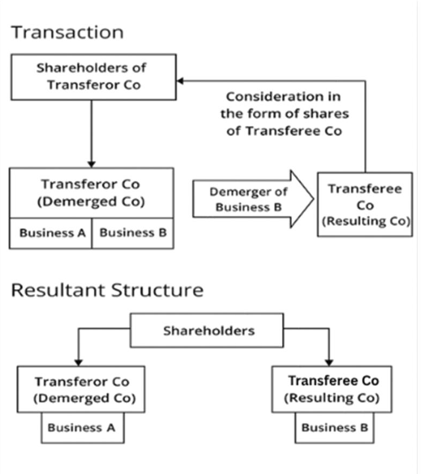
In a typical demerger structure, a distinct division or undertaking say, Business B is carved out from an Existing Company (Demerged Company) and transferred as a going concern to a newly formed or existing Resulting Company through a court-approved Scheme of Arrangement.
The Resulting Company, in turn, issues its shares directly to the shareholders of the Demerged Company in a prescribed ratio, thereby mirroring shareholding between the two entities.
This ensures that the same shareholders hold proportionate stakes in both the Demerged Company (which continues with Business A) and the Resulting Company (which takes over Business B).
NCLT sanctions a Non-Conventional Demerger Scheme (Ajmera’s case)
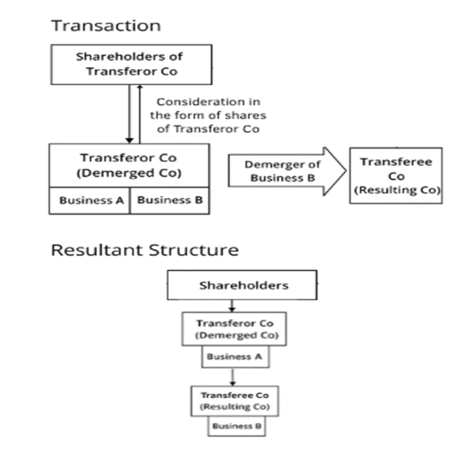
The Mumbai NCLT has sanctioned a unique demerger scheme where Ajmera Realty and Infra India Ltd. (“Demerged Company”), a listed company, transferred a real estate undertaking to its wholly-owned subsidiary, Radha Raman Dev Ventures Pvt. Ltd (“Resulting Company”).
Pursuant to the demerger, the Demerged Company issued its own shares as consideration to its shareholders, instead of the Resulting Company issuing shares.
What it enables and use cases
- This NCLT case sets a precedent for holding companies aiming to demerge verticals to their wholly-owned subsidiaries without affecting their control and capital structure.
- In a listed entity scenario, since the Resulting Company is not issuing any shares, it avoids listing of the Resulting Company separately.
- It also enables the Demerged Company to carve out specific business / project into a wholly owned subsidiary and attract new set of investors / strategic partners in that subsidiary.